
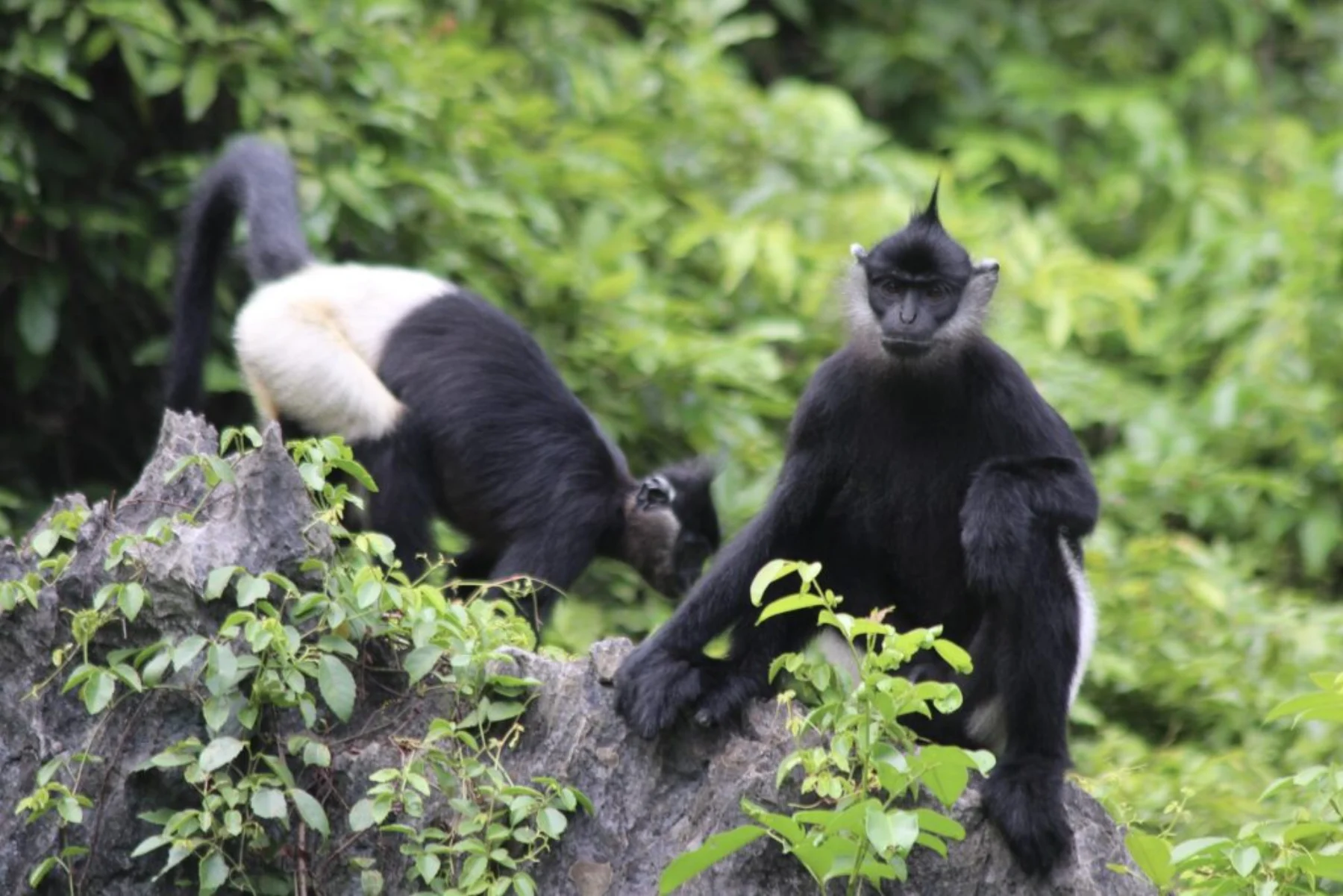
- Status
- Critically Endangered (IUCN)
- Where
- Yen Mo – Tam Diep limestone complex and Trang An, Ninh Binh Province, Vietnam
- Methods
- Interviews with local people, ground surveys, thermal drone surveys
What we found
In the Yen Mo limestone complex, where the species had been thought close to disappearing, we documented 37 langurs in four groups. That makes it the third-largest known population of the species, after Van Long and Kim Bang. Thermal drones were especially useful: they can spot langurs hidden in dense canopy on cliffs that are almost impossible to reach on foot.
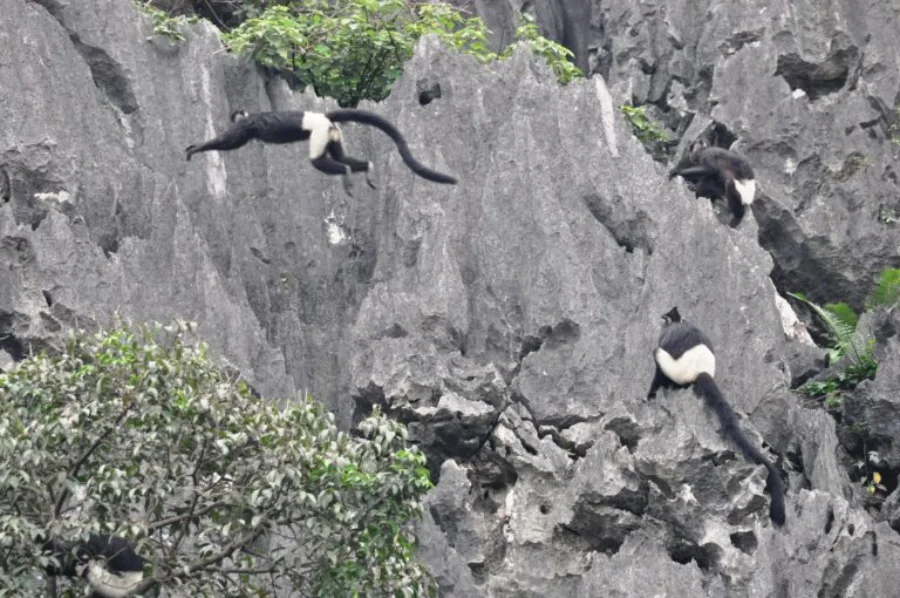
The same surveys recorded other threatened wildlife in the area, including the Indochinese serow (Vulnerable), the keeled box turtle (Endangered), and rhesus and Assamese macaques.
The main threats are hunting, agriculture and limestone quarrying. Because the forest falls under several districts, we recommend a single management body for the whole area, stronger enforcement, and a higher protection status.
Reintroduction in Trang An
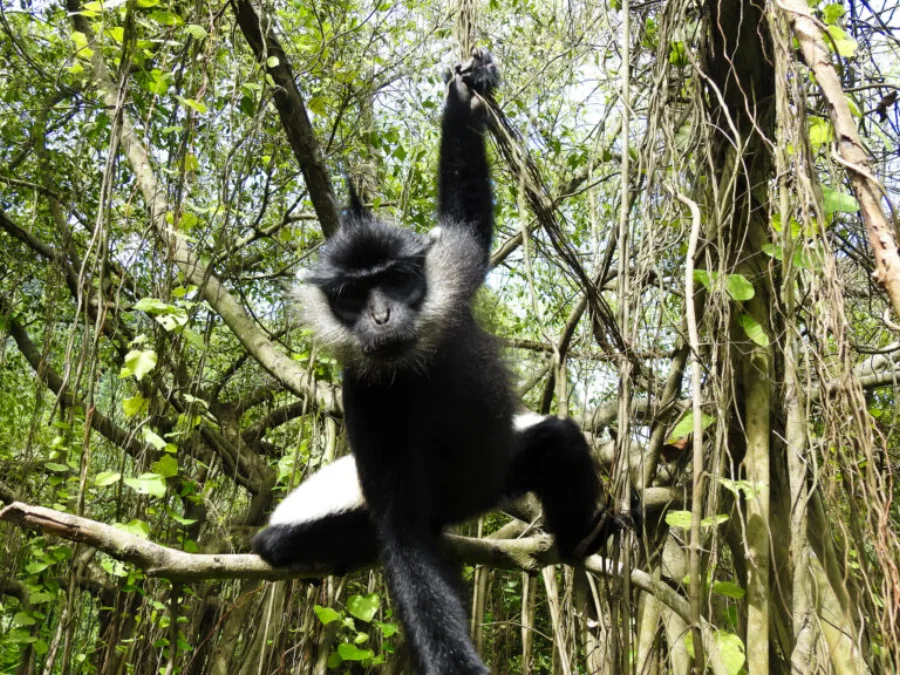
On Pearl Island, a protected 2-hectare area inside the Trang An World Heritage Site, a small group of captive-born langurs was released as a first step toward re-establishing the species there. The group has since grown from three to seven animals.
The Yen Mo results are published in the Vietnamese Journal of Primatology. Read the paper